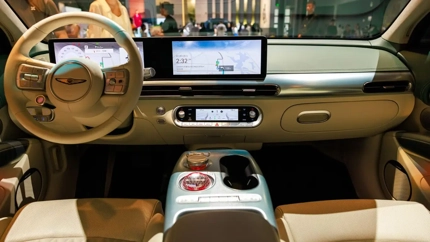

Stellantis has finally fired up local assembly of Leapmotor vehicles in Malaysia. The first model off the line is the C10 crossover — and the launch arrived embarrassingly late. The companies had originally planned to start production back in late 2025, but the cars only began rolling off the conveyor now, nearly six months behind schedule.
Assembly takes place at the Gurun plant in Kedah state. Stellantis has poured 2.23 million euros (about 2.59 million dollars) into setting up operations. Another 3.1 million euros (around 3.6 million dollars) is earmarked for line and infrastructure upgrades. For a conglomerate this size, that’s pocket change — but the money isn’t the point. Leapmotor gets an industrial foothold in ASEAN, and Stellantis gets access to a fast-growing Chinese EV product without having to develop one from scratch. A clean symbiosis.
For now, the plant is geared toward Malaysian domestic demand. But Stellantis is already eyeing exports from Gurun to neighboring countries. Staff went through specialized training on high-voltage systems up to 800V — you can’t just drop these cars onto an old gasoline line and expect things to work. This calls for a completely different production culture.
The Leapmotor C10 has been on sale in China since March 2024, available both as a pure EV and in an EREV version with a range extender. The starting price on the home market is 122,800 yuan (roughly 18,160 dollars). And on June 16, China will see the refreshed C10 unveiled alongside the C11 and C16. The flagship gets new lighting, the body stretches by 10 mm, and the EREV’s electric range climbs to 190 km.
The next Malaysian Leapmotor will be the compact B10 — assembly is promised by the end of 2026. In parallel, Stellantis is preparing B10 production at Zaragoza in Spain and handing the Madrid plant over to the Leapmotor International joint venture. This isn’t a one-off shipment from China anymore. It’s an attempt to build a global network.
And Leapmotor has stronger arguments than promises. In May, the company delivered a record 81,569 vehicles — up 80.99% year on year. Stellantis bought into Leapmotor back in 2023, dropping 1.5 billion euros for roughly 20% of the equity. The bet, it seems, is starting to pay off.
The takeaway for buyers is simple. Chinese EVs are no longer going to arrive only as imports from the Middle Kingdom. They’ll increasingly be built closer to the markets where they sell — which changes everything: pricing, parts availability, delivery times. And this is only the beginning.